

Calling all Poets, Fiction, & Non-Fiction writers that love music — Share your prose of 1500 words or less, using the prompt, Carnival.

The bus from Sarande to Gjirokastra is comfortable but full. We catch it in downtown Sarande, and it loads in that Albanian way—loose arrangements, seat numbers on tickets that don’t match reality—basically a form of musical chairs in a Greyhound before the air conditioning begins. It’s ten o’clock and 90 degrees. When the passengers finally roost, the bus journeys through some amazing mountain scenery, into a fertile river valley that leads to the old town of Gjirokastra, built into a mountainside a thousand years ago.
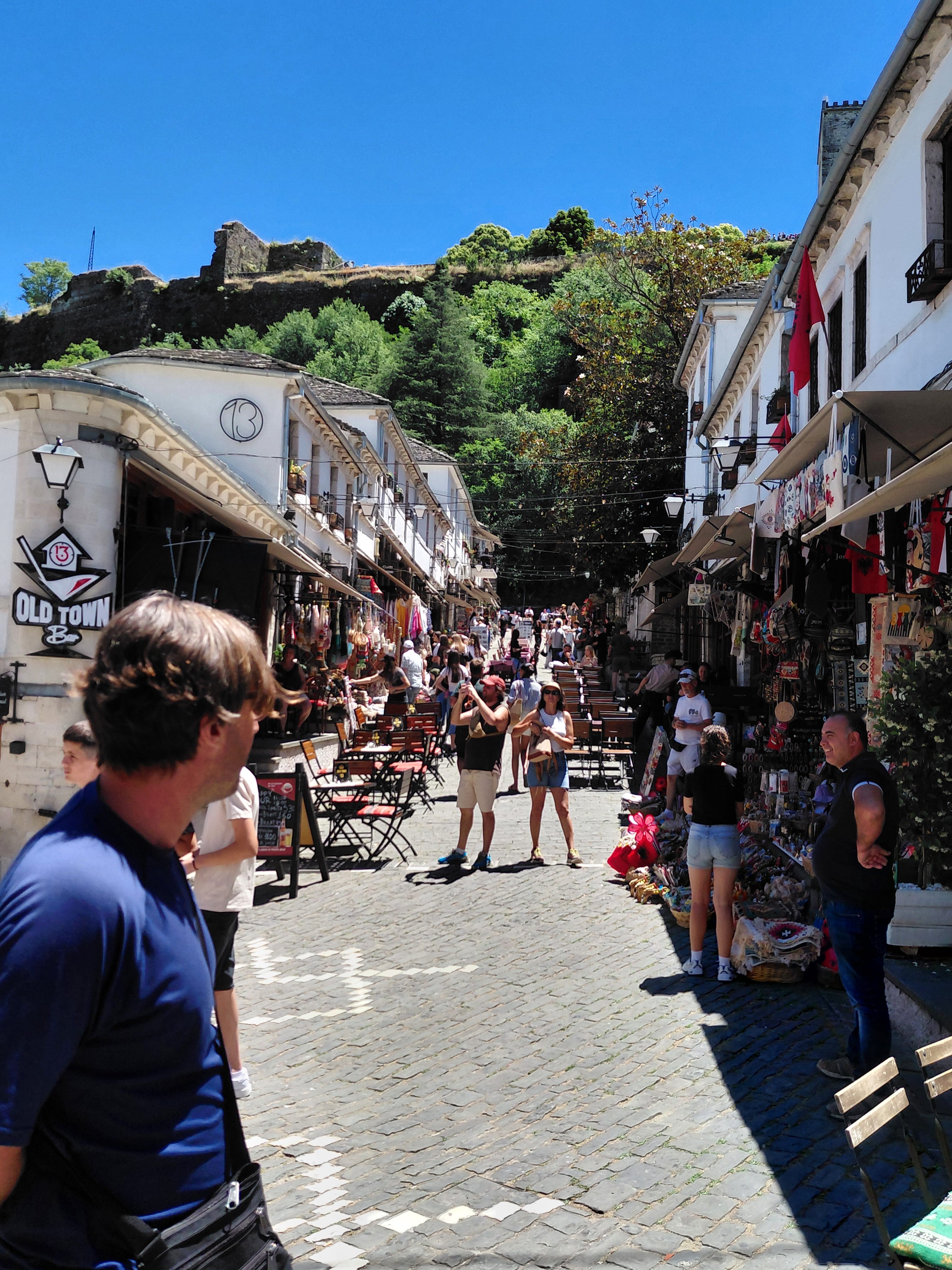
Gjirokastra is a World Heritage site, several degrees cooler than the coastal cities. It is today a resort village, a popular getaway for the well-heeled from the capital city of Tirane. The mountains ringing the town are stunning, and the centuries-old castle looms on a high hill. The main square is a bazaar, filled with knickknacks, some genuinely fine crafts, eateries, museums. It is the birthplace of one Enver Hoxha, the man who took Albania underground and into full-throated communism for five decades. The town can’t decide whether to be proud of the fact, or just relieved that the ordeal is over. A beautiful setting in the southern Alps.
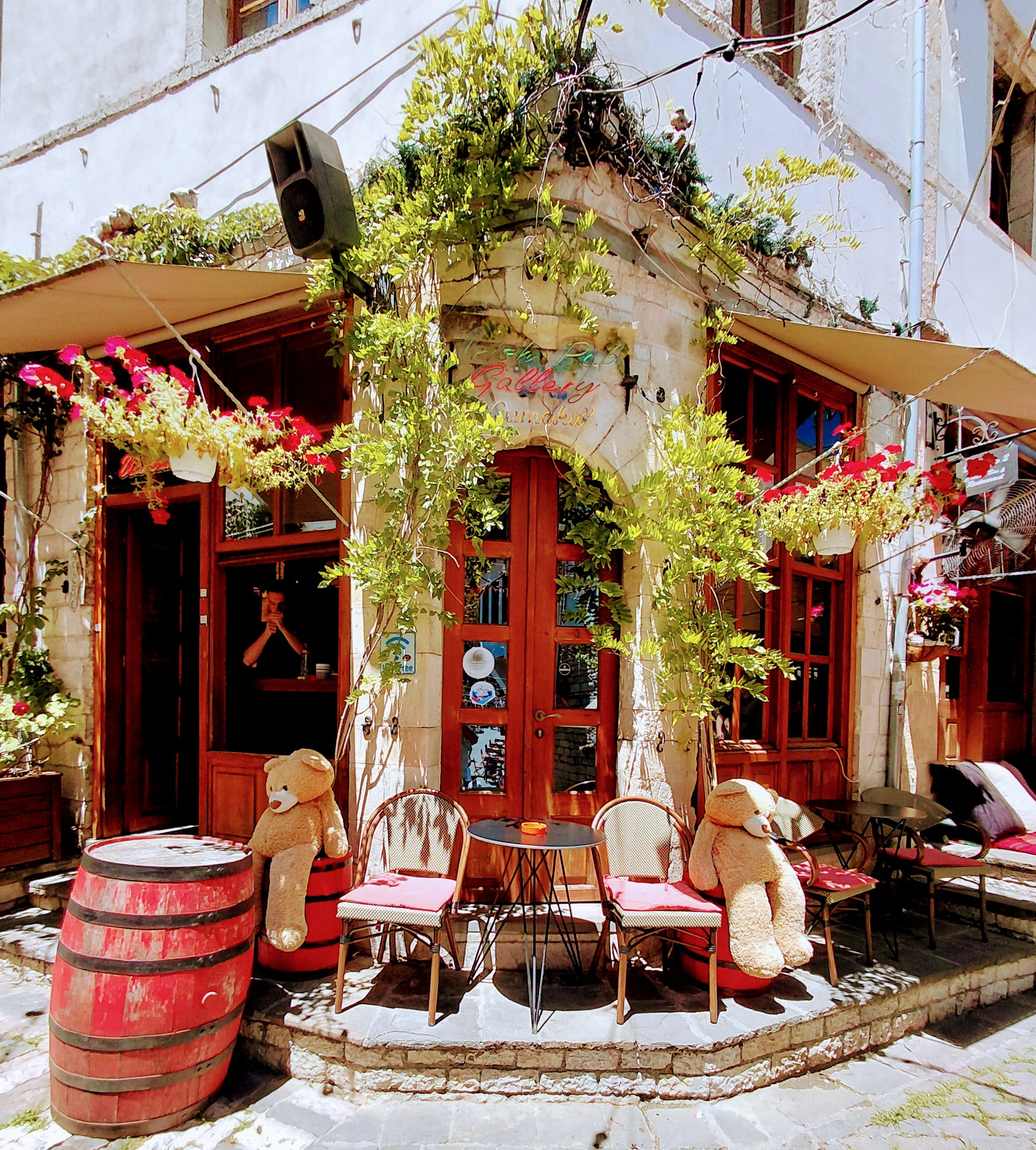
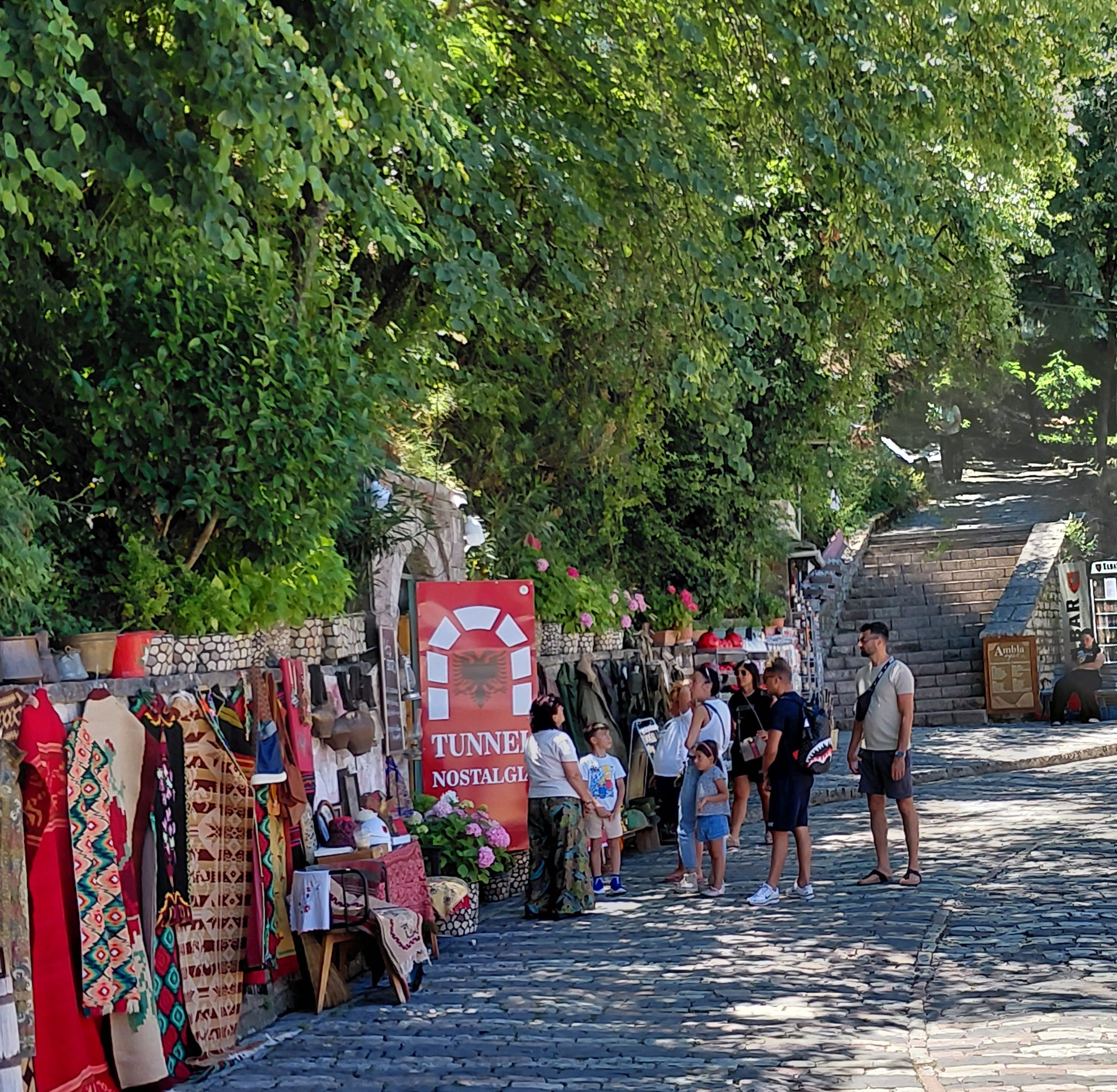
Sarah, my companion—a fellow solo traveler, not a partner, just a temporary, functional marriage of convenience—goes off to examine Albanian filigree. I wander into a “nostalgia tunnel,” a dim, curated mess of knickknacks from the communist era, and spend a while looking at cold war weaponry.
When we reconvene, she has a bracelet and I have a bubble tea. She drinks half of it. It’s just the way two people alone in the big world come together for a minute.
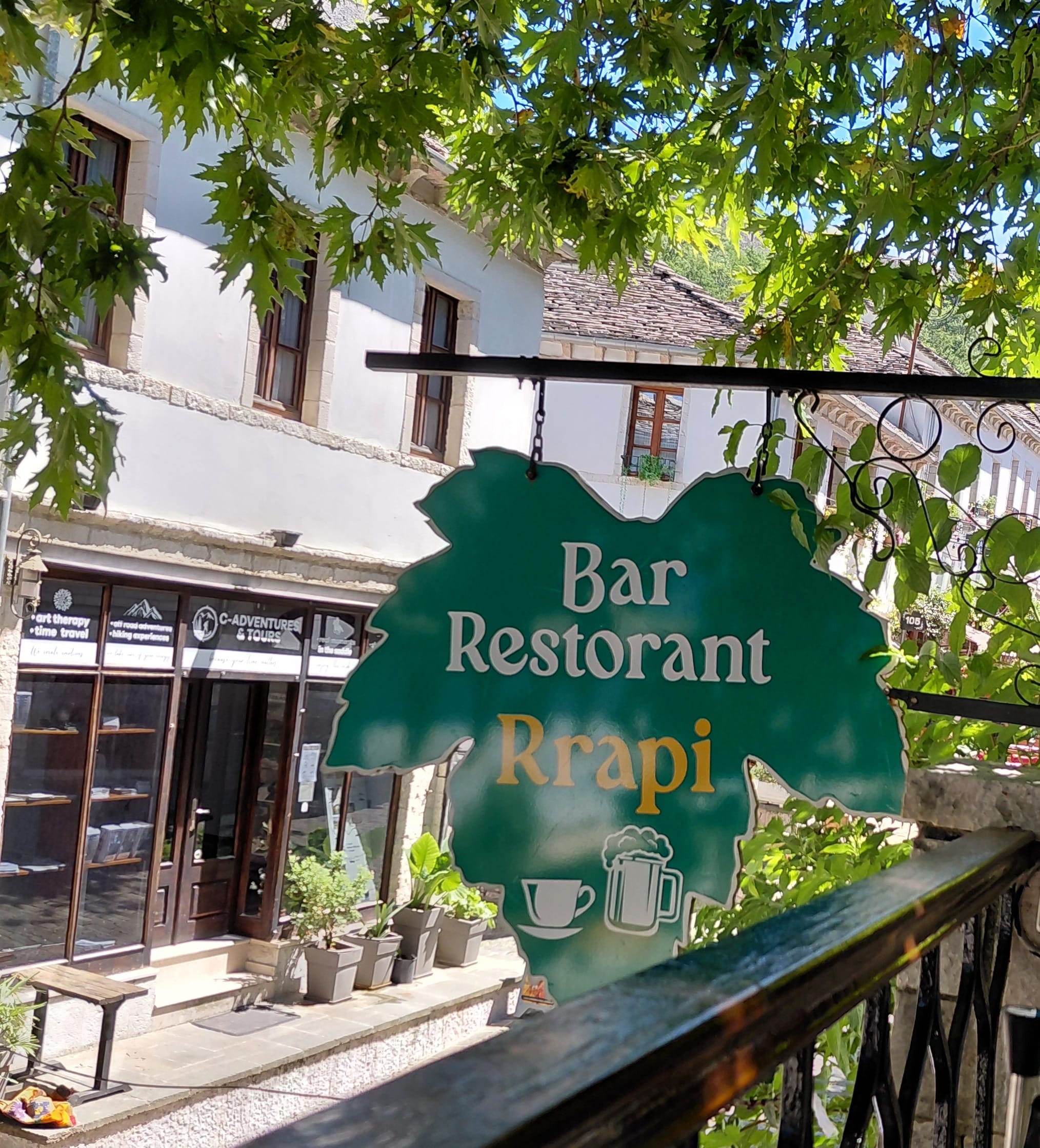
We sit in an outdoor restaurant. The table next to us is Albanian. They are having a clearly political conversation. This group is affluent, confident. Not the beat-down peasantry you so often see in southern Albania. I hear a few words: Epstein, economy, EU, Tel Aviv, White House. It’s clear what they are on about. I know enough Albanian to know they’re talking about their Prime Minister, their government, the protests in the city. I know enough of human communication to understand that the women are horrified that “these morons” are sitting here discussing politics. Openly. Loudly. It’s oddly funny.
They seem to reach some general agreement. Based on what I know of Albania, that means they decided that Trump is out of control, that the US will do the right thing eventually, and that Albania will get the business end of the stick, as it always does. The women relax a bit, and the conversation turns to something about horses, a person named Turras, and Kalifornia. Then to fashion.
At the next table, a Dutch couple wordlessly shares a tiramisu. Apparently, they know everything they need to know about each other, including that dessert will be tiramisu.
There is an old chestnut among men that says no matter how good-looking she is, somebody’s tired of bopping her. That dynamic is on ready display in resort towns. The poor dear gets all decked out, and the man is completely oblivious. Then, there are disdainful women, looking at her defenseless man with eyes that scream I could have done better.
Sometimes one of them has just given up—or sometimes both—now buried in a bowl of spaghetti the size of a washbasin. The meal looks like a road map of Detroit, demolished with the indifference that arises from boredom and disgust.
Just then, they bring my trilece 🙃.
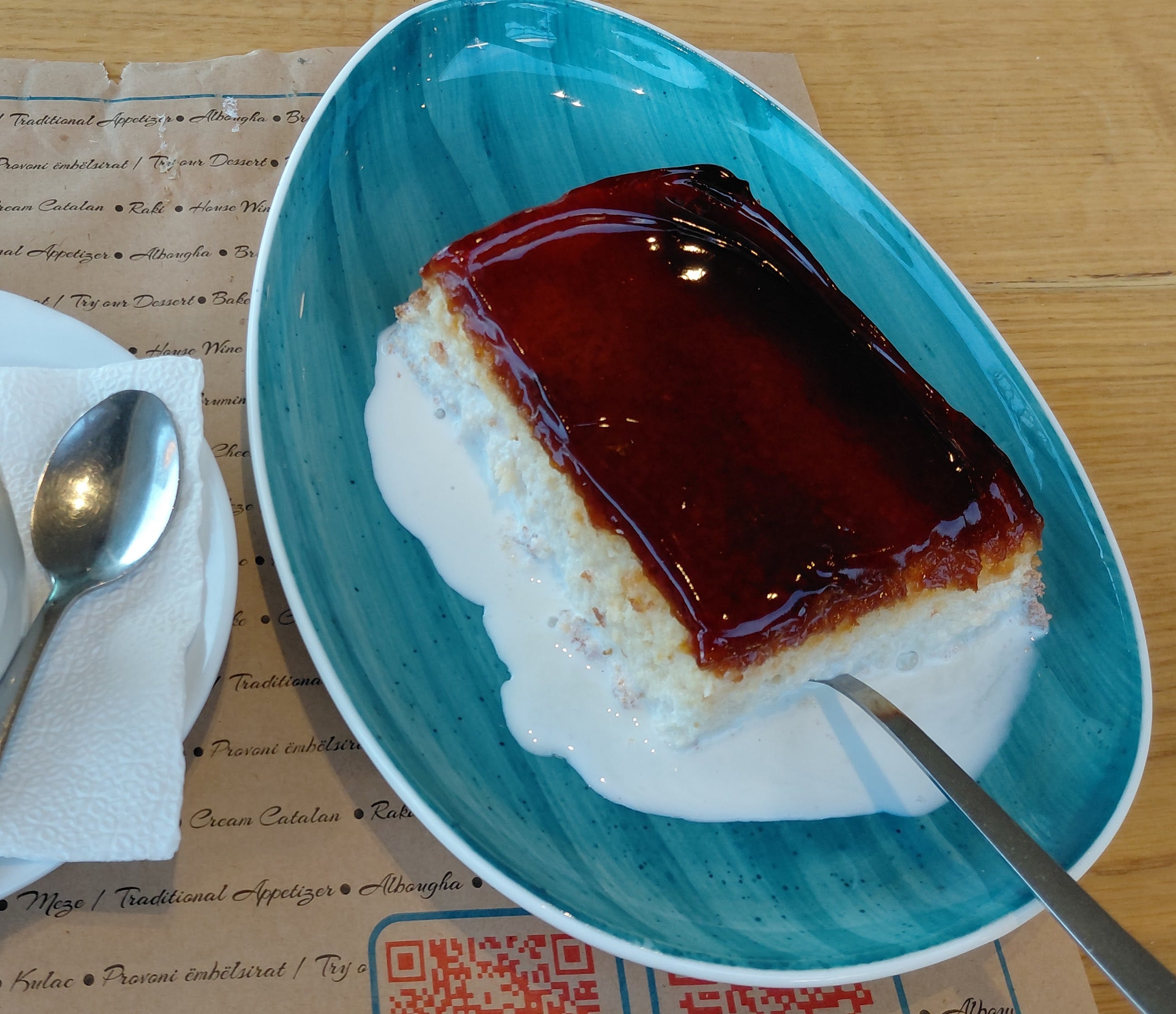
Trilece is the Balkan form of Tres Leche. I have no idea who was first to the trilece party, but someone is definitely a cultural appropriator. My youngest son had suggested—kind of demanded—that I put a candle in it and call it a birthday cake. I just turned seventy, which apparently warrants candle-lit dairy products. I send a picture to the kids. The text comes back immediately: “How are things in Latin Albania?” The banter continues over the course of the day. My dinner partner gives me the side-eye. She doesn’t say anything, but she reaches for a second spoon.
We head back to Sarande just in time to catch the evening carnival. It’s Saturday in June, and Sarande is hopping. The Fish Festival is in full swing—a gauntlet of booths offering every form of seafood, with a large, invitation-only table anchoring the center of the chaos.
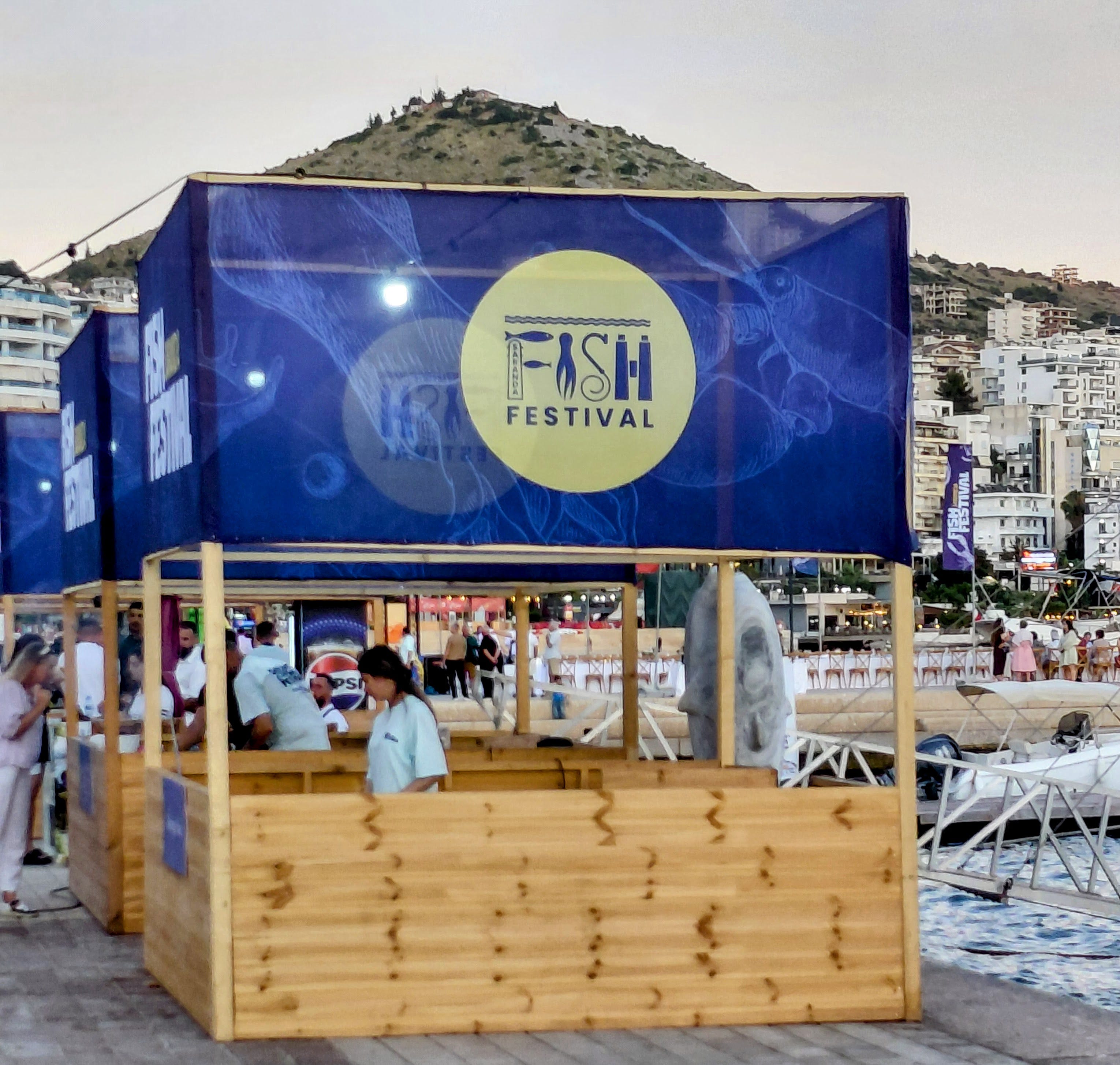
The promenade is crowded, lively, and genuinely happy. There’s a massive sound stage, competent and modern by any standard, playing host to a DJ spinning American rap and flashing hi-res nautical themes on a huge screen. Then, a band singing American pop-rock songs in English. I lean against a railing, watching the scene unfold: the vendors and the dealers.
I stop at an busy seafood booth and order a grilled fish.
“Eating again?” Sarah asks. We’d been eating light all day. Shared salad and qifqi for lunch, coffee for breakfast. Girl diet. Which naturally includes trilece…
“Of course I am,” I say. “The dude is grilling a fish!”
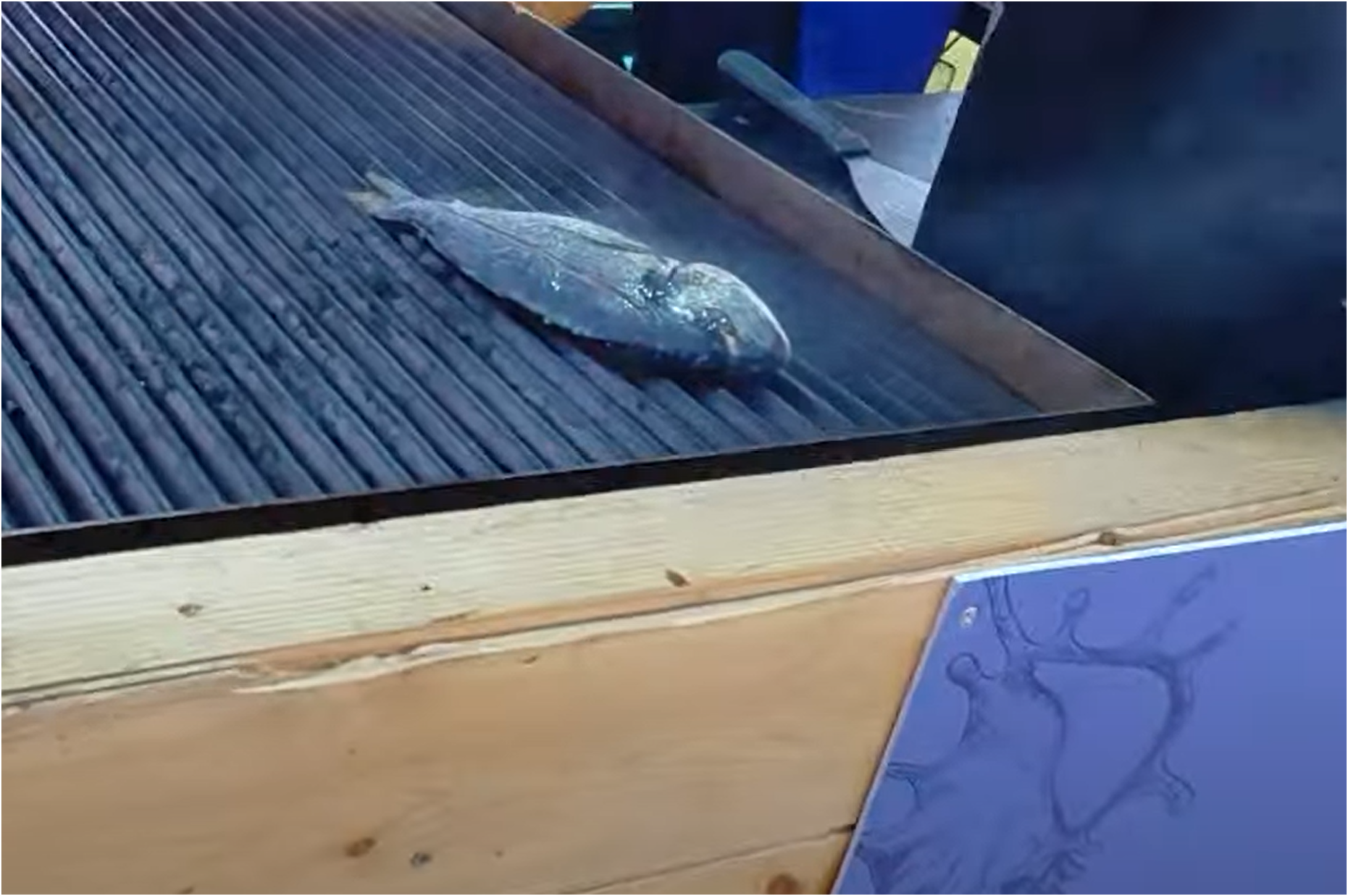
She wanders off to find a proper mojito, leaving me to the smoky fish and the backbeat.
Albanian boys on scooters are doing what Albanian boys do, buzzing through the gaps in the crowd. There are children dancing with their parents and couples from all over the world caught in the slipstream of flashing lights and throbbing bass.
A specific, frantic energy of a summer night that an American understands perfectly. It’s messy, loud, and refuses to be ordered, which suits me just fine. The bass vibrates through the brickwork and into my shoes.
That great street carnival. Exactly where I want to be.


