
Hallelujah
Another Story From the Jukebox

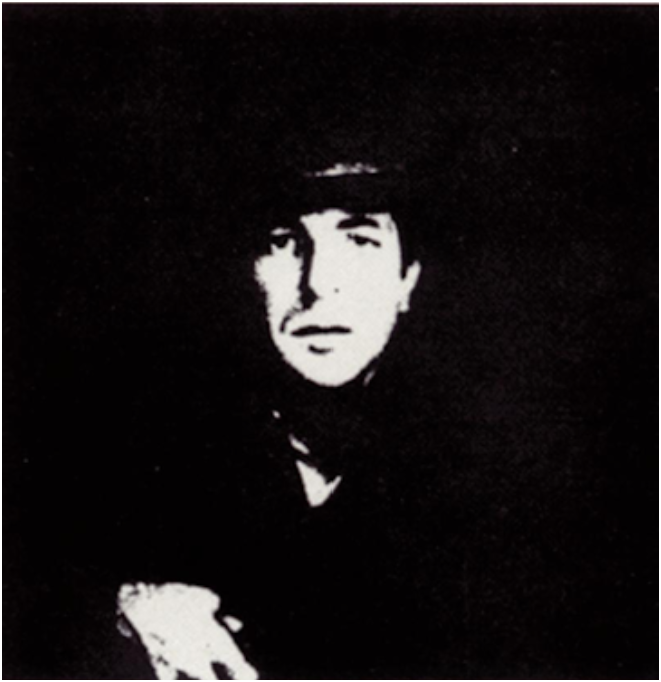
Leonard Cohen the artist lives at the intersection of holiness and horniness.
Cohen the man was by all accounts a fairly devout Jew. And, his poetry references Jesus many times as well. He was also an ordained Buddhist monk. Go figure.
My sense of him is that he practiced his faith in the way he lived his life - intense, precise, passionate, all low key, often a minor key. Cohen inhabited a cool that is beyond my capacity.
Leonard Cohen is one of a handful of artists that shaped my own artistic understanding. I never met him, so I wouldn’t call him a mentor. Certainly a major influence.
His first album was a masterpiece - Suzanne, Sisters of Mercy, No Way To Say Goodbye. But his second record - Songs From A Room - blew me away, gave me a real sense of what is possible artistically. An obscure track on that record - You Know Who I Am - became an obsession for me at age maybe 18:
Sometimes I need you naked
Sometimes I need you wild
I need you to carry my children in
And I need you to kill a child
You see the thread that shows up later in the song Hallelujah, where carnal desire is understood as the same impulse as the holy - the reference to the old testament story of Isaac juxtaposed with “naked” and “wild”. Many of his songs and poems follow the theme. Every human act is sacred. Every human act is profane.
For me, Hallelujah is one of Cohen’s lesser songs. It follows the theme that tracks his career. I call it holiness and horniness. Sacred and profane. He makes the connection much better in other songs. But Hallelujah stuck. He wrote something like 80 different verses, and it has been covered relentlessly, usually poorly. Cohen himself laughed about it.
When asked about his music sounding “more Jewish” in a 1985 interview, Cohen responded, “My songs are always Jewish, they can’t be anything else but Jewish. I write out of my own tradition. My heart was circumcised in the Jewish tradition.”
Maybe there’s a God above
As for me, all I ever seem to learn from love
Is how to shoot at someone who outdrew you
Yeah, but it’s not a complaint that you hear tonight
It’s not the laughter of someone who claims to have seen the light
No, it’s a cold and it’s a very lonely hallelujah
Dark, cynical, rooted in desire, but fuckin’ hallelujah! I get it.
It’s Cohen doing exactly what he does everywhere else, laying a failed marriage on the same table as scripture and refusing to say which one is heavier. That refusal is the engine of his best work. He never resolves the tension between the sacred and the human; he just leaves you standing in it.
But then that chorus. Four notes, symmetrical, rising and landing exactly where the ear expects, wrapped in a soft choir-coo that belongs in a hymnal. It’s treacly, a texture he never reaches for anywhere else in his catalog, not even when he’s singing about Isaac on the altar or Bathsheba on the roof. Everywhere else the sacred has a cost. Here it’s free, four notes.
His own live performances show it isn’t the song itself. He typically sang the word flat, almost bored. The treacle disappears. Even so, it is not on my list of Cohen favorites - it seems to reach melodically where it doesn’t need to. But who am I to second guess Mar Cohen.
My real issue comes in the covers of the song. That elevated chorus allows repeaters to wear a mantle of importance that they don’t have to actually earn. A person I know well sang this song in a large church in Atlanta. I am reasonably certain she didn’t know what it was about. It just sounded “holy”. I pointed her to other Cohen works, better ones. Crickets.
But here is the takeaway. Hallelujah is Cohen expressing his primary theme - the sacred and the profane are one and the same. Desire reloads.

Didn't know anything about this guy. Didn't like the song when I heard it. Didn't want to look where it was pointing me. And yet, you are somehow able to put it all in a new light. Thank you Rick.